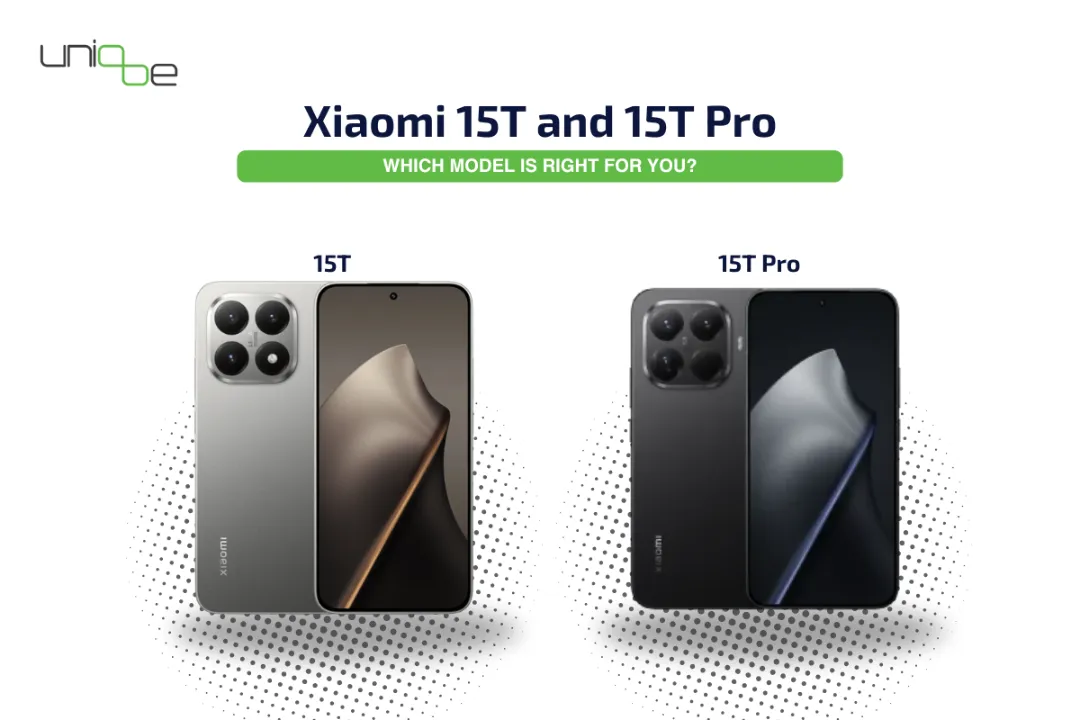

Choosing between the Xiaomi 15T and 15T Pro is harder than it looks. Both pack serious hardware, Leica-tuned cameras, and flagship-level displays — but the differences between them could determine your satisfaction for the next two years.
Whether you’re upgrading your daily driver or evaluating which model delivers stronger long-term value, this head-to-head breakdown covers everything you need to make a confident, informed decision right now.
Let’s dive into the practical details so you can protect your margins and source the right inventory.
Table of Contents
Quick Verdict: 15T vs 15T Pro
Buy Xiaomi 15T if…
The Xiaomi 15T is a strong mid-range option that balances performance and affordability.
- You want a reliable everyday smartphone for daily use
- You prefer better value for money without paying flagship prices
- Casual photography is enough for you with a solid 64MP camera
- You still want a smooth AMOLED 120Hz display
- You need good battery life with 67W fast charging, but not the fastest on the market
Buy Xiaomi 15T Pro if…
The Xiaomi 15T Pro is ideal for users who want flagship-level performance and premium features that will last for years.
- You need top-tier performance for gaming, multitasking, or heavy apps。
- You care about high-end photography, especially detailed shots with the 108MP camera
- Ultra-fast charging matters to you
- You want a phone that feels more future-proof with higher RAM and storage options
- You’re a tech enthusiast willing to pay more for better specs
What Are the Key Differences Between Xiaomi 15T and 15T Pro?
Just looking at the specifications, it’s clear that both models aim to deliver impressive performance, but there are some nuances to consider. Here’s a concise comparison table highlighting critical features:
| Feature | Xiaomi 15T | Xiaomi 15T Pro |
|---|---|---|
| Display | 6.67-inch AMOLED, 120Hz | 6.67-inch AMOLED, 120Hz |
| Processor | Snapdragon 7 Gen 1 | Snapdragon 8 Gen 1 |
| RAM Options | 8GB / 12GB | 12GB |
| Storage Options | 128GB / 256GB | 256GB / 512GB |
| Camera (Main) | 64MP main + 8MP ultra-wide + 2MP macro | 108MP main + 12MP ultra-wide + 5MP macro |
| Battery | 5000mAh, 67W fast charging | 5000mAh, 120W fast charging |
| Operating System | MIUI 12 based on Android 13 | MIUI 12 based on Android 13 |
| Price Range | More affordable | Higher-end price |
As you can see from the table, the Xiaomi 15T and 15T Pro have a lot in common, making them appealing options. However, the Pro model takes certain features up several notches.
How Do the Displays and Designs Differ Between the Xiaomi 15T and 15T Pro?

Screen Size, Resolution & Refresh Rate
Looking at the Xiaomi 15T display comparison, both models feature a bright, fast-moving 144Hz refresh rate. However, the Xiaomi 15T Pro AMOLED display is slightly larger at 6.83 inches compared to the standard 6.67-inch screen. Both adjust their speed based on what you are viewing, which is like a car automatically shifting gears to save fuel.
Build Quality, Materials & Color Options
Regarding Xiaomi 15T Pro build quality, the premium model uses a reinforced metal frame and tougher Gorilla Glass. The standard model still feels solid but uses standard glass and frame materials to keep costs down. As for the Xiaomi 15T waterproof rating, both phones carry an IP68 certification. This means they can survive a quick drop in a puddle without frying the internal circuits.
Which Processor Powers the Xiaomi 15T and 15T Pro?
Dimensity 9300+ vs Snapdragon 8 Elite — Real-World Performance
This is the biggest factor in our Xiaomi 15T processor comparison. The standard model runs the very capable MediaTek chip, which handles daily operations without breaking a sweat. However, the Pro houses the much faster Xiaomi 15T Pro Snapdragon 8 Elite, giving it a clear advantage for intense tasks.
If you check the Xiaomi 15T Pro benchmark performance, including the Xiaomi 15T Pro AnTuTu score and the Xiaomi 15T Pro Geekbench result, the Snapdragon easily pulls ahead. You will notice this extra horsepower in the Xiaomi 15T Pro gaming performance, where high frame rates stay stable. The Xiaomi 15T Pro thermal performance is also managed by a large vapor cooling chamber, meaning it does not get uncomfortably hot during use.
RAM, Storage & Software Optimization
When checking the Xiaomi 15T Pro RAM storage options, you can get up to 16GB of memory and a massive 1TB of space. It uses Xiaomi 15T Pro LPDDR5X RAM and Xiaomi 15T Pro storage UFS 4.0 technology. Think of this as the phone’s filing cabinet moving at warp speed, so heavy files load instantly.
Both models run the latest software, bringing unique Xiaomi 15T HyperOS features like advanced multitasking and background app management. These tools keep the phone from slowing down when switching between heavy tasks. For a busy business owner, this means less waiting and more getting things done.
How Do the Cameras Compare on the Xiaomi 15T vs 15T Pro?
Leica Camera System — What’s Different on Each Model
The cameras are a major talking point in any Xiaomi 15T Pro camera review. Both devices have a solid setup, but the Pro model uses the superior Xiaomi 15T Pro Leica Summilux lens. This wider aperture lets more light hit the sensor, giving you clearer shots in dimly lit warehouses or offices.
You also get a longer-reaching Xiaomi 15T Pro telephoto lens for sharp zoom, paired with a capable Xiaomi 15T Pro ultrawide camera for wide landscapes. The Xiaomi 15T Pro OIS stabilization ensures your shaking hands will not blur the final photo. The standard 15T takes perfectly fine photos, but the Pro model delivers that true Xiaomi 15T Pro Leica camera experience.
Video Recording Capabilities
If you shoot product videos, the Xiaomi 15T Pro video recording stands out. It supports crisp Xiaomi 15T Pro 4K video and even 8K resolution, capturing fine details for content creation. The standard model limits some frame rate options, though it remains sufficient for casual clips.
Both phones feature a reliable Xiaomi 15T Pro selfie camera that handles Zoom calls with ease. Whether you vlog or record inventory walkthroughs, the built-in stabilization keeps your footage steady.
What Are the Battery and Charging Differences Between Xiaomi 15T and 15T Pro?
Battery Capacity and Real-World Battery Life
A common question from buyers involves the Xiaomi 15T battery life test. The standard model offers a 5000mAh battery, while the Pro model bumps this up slightly to 5500mAh. Both easily last a full workday under normal use, even when tracking shipments or fielding emails constantly.
Background apps drain power slowly, keeping standby times long and efficient. You can confidently skip carrying a charger if you only use your phone for basic texts, browsing, and calls.
Charging Speed — Wired, Wireless & Reverse Charging
The Xiaomi 15T Pro charging speed is built for busy schedules. It supports higher Xiaomi 15T Pro fast charging watt speeds up to 120W, taking the battery from zero to full in roughly 20 minutes. The standard model uses 90W charging, which is still faster than most competitors on the market.
You also gain Xiaomi 15T wireless charging on the Pro model at 50W, plus reverse charging to power up your wireless earbuds. The standard 15T skips the wireless charging coils entirely to keep manufacturing costs lower.
How Do the Xiaomi 15T and 15T Pro Compare in Price and Value?
Retail Price Breakdown by Region and Storage Variant
The Xiaomi 15T vs 15T Pro price difference typically sits around $200 USD. You might see fluctuations based on the Xiaomi 15T Pro Hong Kong price versus the Xiaomi 15T global version pricing. Keep an eye on storage tiers, as the total cost jumps quickly when you double the storage capacity.
Resale Value, Depreciation & Long-Term Investment
When analyzing Xiaomi 15T Pro value for money, you must consider the Xiaomi 15T Pro depreciation rate. Mid-tier Android phones can lose 40-50% of their value in a single year, making them risky to hold long-term. Because it has a flagship Snapdragon processor, the Xiaomi 15T Pro resale value holds up much better on the secondary market.
For store owners, managing Xiaomi 15T Pro inventory turnover means accurately tracking Xiaomi 15T Pro demand volume. Fast-moving, authentic stock protects your tight margins. Always source from a Xiaomi 15T Pro authorized reseller to minimize your Xiaomi 15T Pro gray market risk.

Which Xiaomi Model Should You Choose — 15T or 15T Pro?
Best Choice for Everyday Consumers
The standard 15T makes complete sense if you just want a reliable, cost-effective phone. It handles web browsing, basic apps, and emails perfectly well without the top-tier price tag. If you are comparing it against older models, it is a solid, practical upgrade that saves you money upfront.
Best Choice for Power Users and Enthusiasts
If you want a true Xiaomi flagship Android 2026 experience, the Pro is the way to go. If you are reading a Xiaomi 15T Pro buy guide or comparing the Xiaomi 15T Pro vs Samsung Galaxy, the Snapdragon 8 Elite justifies the extra cost. This is exactly what you need to know when weighing the Xiaomi 15T Pro vs standard which to buy for business or personal use.
Using a Xiaomi 15T Pro authentic distributor is absolutely critical here. It guarantees proper Xiaomi 15T Pro IMEI verification, saving you from frustrating AI invoice rejections during the Xiaomi 15T Pro Amazon ungating process. You need a Xiaomi 15T Pro verified supplier to avoid counterfeit threats that can get your store permanently suspended.
Verdict Summary Table — 15T vs 15T Pro Winner by Category
| Category | Winner | Reason |
|---|---|---|
| Performance | Xiaomi 15T Pro | The Snapdragon 8 Elite handles heavy multi-tasking easily. |
| Camera | Xiaomi 15T Pro | Advanced Leica Vario-Summilux optics gather more light. |
| Battery | Xiaomi 15T Pro | Larger capacity and ultra-fast 120W charging times. |
| Value | Xiaomi 15T | Better for tight budgets while keeping core display features. |
| Overall | Xiaomi 15T Pro | Higher resale value and longer functional lifespan for business use. |
Final thoughts
The Xiaomi 15T and 15T Pro are both exceptional devices, but they serve different priorities. If flagship-grade Snapdragon performance, advanced Leica optics, and stronger long-term resale value are non-negotiable, the 15T Pro justifies every dollar of its premium. If you want a capable, fast, and well-rounded smartphone without the top-tier price tag, the standard 15T delivers outstanding value. Whichever model you choose, sourcing from a verified, authorized distributor ensures you get genuine hardware — and the peace of mind that protects your investment for years ahead.
If you are looking to scale your electronics business without tying up cash in stagnant inventory, remember that Uniqbe is open for our dropship program. It is a highly practical way to manage your stock efficiently while maintaining healthy margins. Catch you on the next product breakdown!
Buy or Dropship now: Log In to Purchase or Connect with us via Whatsapp for enquiry on products availibility.
FAQs
What is the main difference between the Xiaomi 15T and 15T Pro? The primary differences lie in the processor (Dimensity 9300+ vs Snapdragon 8 Elite), camera system (Leica lens tier), and charging speed — with the Pro offering superior performance across all three categories.
Is the Xiaomi 15T Pro worth the extra cost over the standard 15T? For power users, content creators, and those prioritizing long-term resale value, the Pro’s Snapdragon 8 Elite chip and advanced Leica camera system make it worth the premium price.
Which Xiaomi 15T model has better camera performance? The Xiaomi 15T Pro features a higher-tier Leica Vario-Summilux lens system with improved telephoto and low-light capabilities compared to the standard 15T.
How do the battery and charging speeds compare between Xiaomi 15T and 15T Pro? Both models offer large battery capacities with fast charging, but the 15T Pro typically features higher wattage wired charging and may include additional wireless charging options.
Which Xiaomi 15T model holds its resale value better? The 15T Pro generally retains value longer due to its flagship Snapdragon processor and premium feature set, making it a stronger long-term asset — though both Android models are subject to typical mid-to-high-tier depreciation cycles.